
Economics Live: China’s Factories Slip Back Into Contraction — Falling Aggregate Demand for Your A-Level Essays
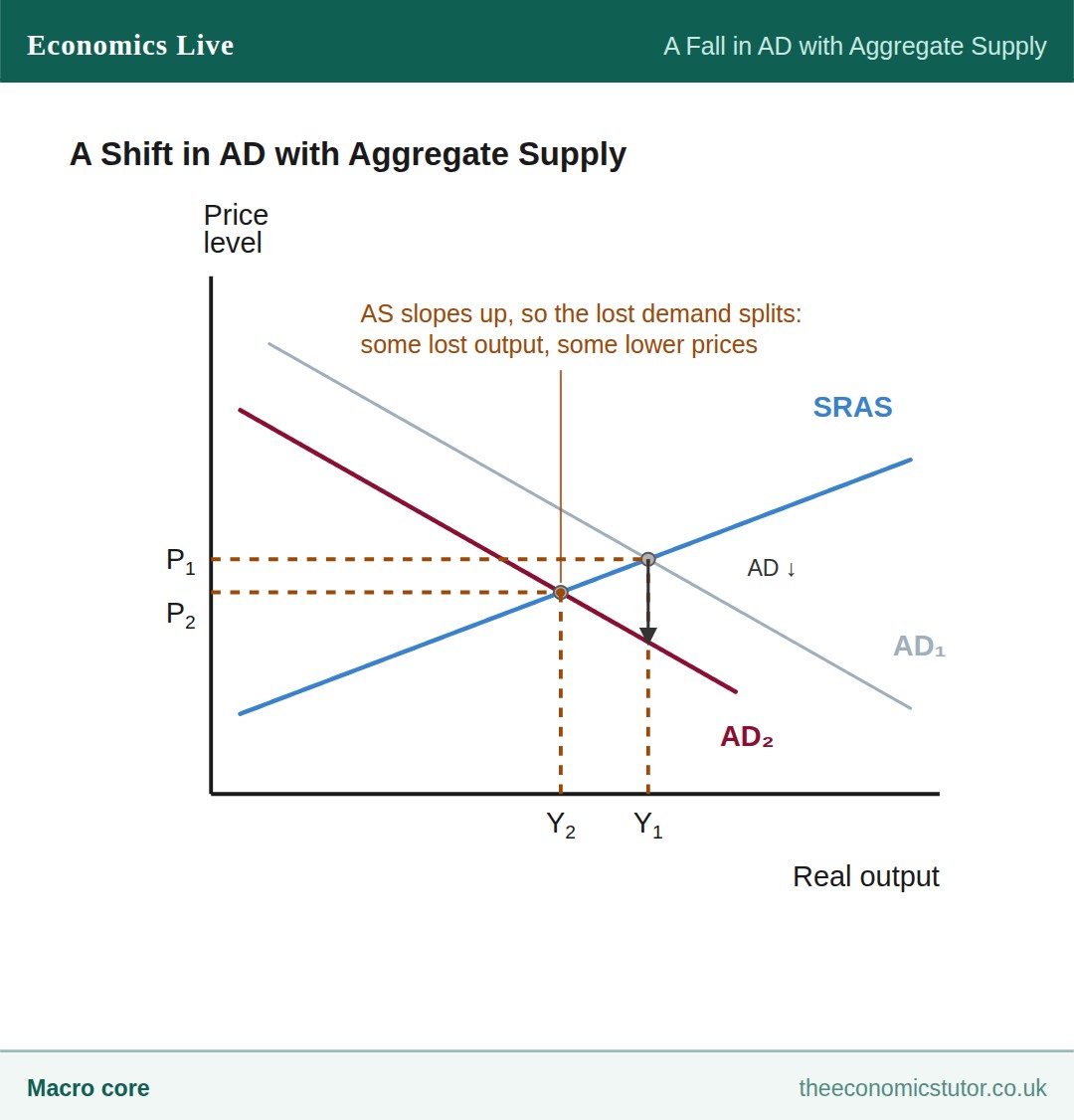
The news: China’s official manufacturing PMI fell to 49.3 in October 2026, down from 50.1 in September, the National Bureau of Statistics said on 31 October. Any reading below 50 means activity is shrinking compared with the previous month. The new orders index fell 1.1 points to 49.4 and production fell 1.9 points to 49.8. The non-manufacturing PMI also slipped to 49.7. Officials blamed demand brought forward before the National Day holiday and a complex international environment, while analysts pointed to soft household spending, weak car sales and fewer overseas orders.
How to use this in an essay: Falling new orders are a leading indicator of weaker aggregate demand. Lower consumption (C) and fewer export orders (X) shift AD to the left, reducing real output and putting pressure on jobs. Beijing targets 4.5% to 5% growth this year and may need fiscal or monetary stimulus.
Use this in a 25-mark question on the causes of slower economic growth, or on how a slowdown in one major economy spreads to others through trade (Edexcel 9EC0 Themes 2.2 and 4.1; 8EC0 Theme 2.2; iGCSE 4EC1 economic growth and globalisation; IAL Units 2 and 4).
Evaluation point: A falling AD curve normally means lower inflation, yet the purchase prices index was still 56.8, showing input costs rising, partly from higher oil prices. That suggests SRAS is also shifting left. High-tech manufacturing also kept growing (PMI 51.3), and one month of survey data may reflect holiday timing.
Source: english.news.cn